Friday, May 9, 2014

A Little Bit About Libertad

"Truth does not change according to our ability to stomach it." 
-Flannery O'Connor

I have a ton of information now on Libertad and I am not even really sure where to start and how exactly to share it with everyone. To me, every detail seems important, but I don’t want to bore anyone. I suppose that’s the beauty of a blog- you can just skip around and read whatever you want.

To begin, here is a video I made while traveling around on motorcycle one day, announcing a community meeting. This will give you an idea of what the town is like and a few tid bits of information that I added. I tried to put some of the typical music we listen to here but youtube kept muting my video for copyright reasons, so instead it has a few of my brother’s tracks (see https://soundcloud.com/johnlooke


History
Libertad is a township in San Onofre, Sucre, on the Caribbean coast in Colombia. There is between 7,000 and 8,000 inhabitants and it is a community comprised almost completely of Afro descendants. Libertad was founded on January 6, 1933, making it 81 years old. Originally it was called Mambú and the land was in the hands of a few wealthy families, but the people who actually lived there and worked the land fought for it and won, changing the name to Libertad (which means freedom).

The town began very small, with just several houses, but little by little more families moved in and built their homes. The original entrance to Libertad was by river and later they built the road that connects Libertad to the highway about twenty kilometers away (I’m totally making up that number… I don’t know how far away the high way is. It’s about one hour on motorcycle.) Electricity was brought to Libertad in 1982 and cell phone service arrived in 2000.

A Time of Violence
Also in the year 2000, the paramilitaries arrived. Paramilitary presence had been noticed since 1997, but in 2000 they came to stay. Libertad is the ideal location for illegal groups involved in smuggling since they are at the end of a not-so-commonly-traveled road that leads to a not-so-touristy port. The man in charge was called El Oso, The Bear. He lived just outside of the community but was the one calling the shots, making the rules for the town, and solving the conflicts between neighbors. The people experienced many forms of violence: homicide, rape, humiliation, forced selling of land, animals, and equipment, among other awful acts. While El Oso and the paramilitary troops were present everyone lived in fear and all trust within the community was broken. To this day, the community is still struggling to rebuild this trust and confidence that was lost.

One thing that sets Libertad apart from many other communities affected by the violence in Colombia is that they were a community that was resistant. While many other communities were forced to leave their homes or experienced massacres, the people of Libertad refused to leave, even under the oppressive thumb of the paramilitaries. The community is proud of the fact that they were the ones who forced the paramilitary troops to leave Libertad: the men closed off all the entrances to the town and checked every vehicle that came and left; the women sat on their doorsteps with machetes across their laps, drinking coffee to stay awake, guarding their homes and the streets; upon reaching their breaking point, the town rallied together and even killed a member of the paramilitary group. Finally, a colonel from the neighboring state arrived with troops to assist Libertad in ridding the community of paramilitary presence once and for all.

Another thing that sets Libertad apart from other communities on the coast of Colombia is that they are the first community to have a pilot project of collective reparations approved by the government. These reparations include things like building a Multigenerational Center, building a sports complex, improving access to education and health care, recuperating culture, traditions, and social connections that were lost due to the oppression of the paramilitary troops, and guarantees that what happened in Libertad will never happen again. Unfortunately, the pilot was approved a year ago and very little has been actually completed.

Economy
The economy in Libertad is pretty crappy right now. Before, there was a shrimp farm that employed about 200 people and really was a good push for the economy of all of Libertad. When that went bankrupt last year, it left many people without work and very few other options for generating money flow within the community. Another problem that makes money an issue in Libertad is the lack of land. It is very rare to find someone in Libertad who actually owns land or has their own place to farm; most people rent or borrow land. Unfortunately, most of the wealthy people who own the land (and do not actually live in Libertad) are now using the land for cattle which uses large amounts of land and doesn’t benefit the community. When people do farm, the main crops are yucca, corn, rice, and ñame (I really have no idea how to say that in English).

Other people in Libertad live by taking people places or delivering messages on their motorcycle, selling fruit (mango season now!), chopping up cows or pigs on their front porch and selling meat, having stores in their living rooms, selling lottery tickets, fishing, teaching, or any other random thing that one can find to sell, fix, or exchange.

But the economic situation really is grave. Many people have left because of the lack of opportunities.

Politics
As a community of Afro descendants, Libertad has special rights because of the Law 70, which guarantees considerations such as collective land ownership and government support in conserving traditions. Another special right included in this law is the right to a community counsel as their form of government. A community counsel consists of an assembly and a board of directors. This group plans and directs projects for the community and also advocates for the rights of the community. Right now, a large part of the work that the counsel does is pushing the government entities to follow through on the reparations that they promised in the pilot project of collective reparations. The work that I do is mainly in support of the community counsel.

Public Services
Libertad has a health center that is attended by a medical professional who has finished school but is required to lend a year of service in a rural community. He comes sometimes on Monday, sometimes on Tuesday, and he always leaves on Thursday. Let’s just say it is not a very consistent service and there is definitely a lack of medical attention in the community. Another major issue is the lack of ambulance. More than one person has died since I have arrived solely because they had no way to get the medical attention they needed in a timely manner.

Libertad has a school that includes elementary and high school. The school even has a library, but it is consistently locked. I’ve never seen it used. It also lacks special classrooms such as science labs.

There is no garbage service in Libertad, not to mention recycling. Most people burn their trash or throw it in the streets. There is lots of talk about cleaning the town up and we have done it a couple of times, but really the entire culture of trash disposal needs to be changed so that once the roads are cleaned, they stay clean.

The roads are not paved and when it rains they get filled with ravines and holes. The road in front of my house is always pretty nasty with water and a kingdom of mosquitoes. There is talk about the government starting to put in a drainage system. That would be pretty nice.

Libertad does have electricity, but it is not very consistent. It is recommended that at night, you unplug your refrigerator so that the lights and fans work better. The electricity probably goes out about once a week.

There is an aqueduct that brings water to Libertad, but it is not always turned on. I have not figured out still how they decide when to turn it on, but it generally is on in the morning around 7 am until noon. Some days longer. Some days not at all. When the water is on, everyone fills up all their tanks just in case it doesn’t come back for a few days. It is called agua gorda (fat water) because it has salt in it. It is not really for drinking. I have to buy my water to drink. People who don’t have water spigots in their homes have to either buy their water from people who have massive stores of it or look for it in the river. Some people also collect rain water, but since it hasn’t rained for a long time, that’s not really an option right now.

Transportation options in Libertad consist of bus, motorcycles, and donkeys. My personal favorite is motorcycle, but I have yet to try donkey…


So there it is: Libertad in a nutshell. This is my new home and my new community. I am grateful to be here, to be learning about the stories lived here, and to be a part of the current story that we are all living now.

There is so much more to share, but perhaps it would be better to come and experience it. I have an extra bedroom…

Saturday, May 3, 2014

A Different Kind of Easter

“Fill each day with life and heart. There is no pleasure in the world comparable to the delight and satisfaction that a good person takes in doing good.” – John Tillotson

In my family, we have Holy Week traditions involving taking the Last Supper, painting Easter Eggs, fasting, and breaking the fast with pancakes at church and hunting for jelly beans in the living room followed by a huge feast with family.

The traditions in Libertad are a little bit different…

We started on Palm Sunday with the blessing of the palms/olive branches by the priest (who arrived 2 hours late) and then a procession through town singing praise songs (which sounded a little bit like dirges, but the words were beautiful) and including a donkey and young girl dressed like Jesus.


A surprise I found on my blessed olive branch during the Palm Sunday Service

Then the food preparations began. People traveled to neighboring towns to find enough rice, fish, and beans to feed 5,000. Literally everyone made enough food to feed 5,000. All day on Thursday and Friday people give food to everyone who passes by their house, each plate piled high with rice and beans, fish, and clown salad (beets, potatoes, carrots, and eggs) and a huge glass of chicha (ground up rice with lots of sugar and cola). On Thursday I was served five plates and had two more delivered to my house. On Friday I tried to escape the mounds of food since I ended Thursday feeling fairly sick, but I still ended up being served three large plates and one more delivered to my house. I didn’t want to say no because they gave me the food with so much love! Plus, they were plates full of my favorite foods here!


They also make sweets.  Unlike the chocolate bunnies, jelly beans, and Cadbury eggs that I am used to, the sweets here are made of fruits or seeds that are ground up, boiled, mixed with a ton of sugar, and served like a cream.  I have had sweets made out of everything from papaya, coconut, and mango to ñame (a root kind of like a potato) and wondu (I have no idea how to spell that, but it’s basically the pit of a fruit).  However, I found some chocolate covered almonds in the store in Sincelejo and splurged in order to have some chocolates semi-shaped like eggs on Easter.


Another one of the traditions is playing cards. Every night people put tables out in front of their houses and the people come and play. There are certain tables that draw huge crowds. There are several games that are played, but the only one I have learned is called Nines. I don’t like it at all. Everyone is dealt two cards and whoever has cards that add up to nine, or is the closest to nine without going over, wins. It is pure luck. Except when people cheat. And I guess cheating is part of the game: the dealer puts the cards in order so that they get nine, players hide cards in pockets or sleeves to get closer to nine, or people switch their hand with cards already laid on the table. So it’s luck or cheating, neither of which I am a big fan. And it’s a betting game. I’m not a fan of betting either.

But the kids like it when I play because I make a big stink about how I always get 10 (which is the worst you can get) and they think it is funny. I think it is funny too, except I keep losing 100 pesos (which is like 5¢) and when I decide not to lose any more money kids always say that they will spot me, but I don’t like losing kids’ money either so I end up just watching. It is definitely entertaining and people take it really seriously.


Of course, as in Christmas and New Year’s, dancing and drinking are a big part of the festivities as well. I’ve heard two different versions of the story (one saying the police have prohibited it and another saying the priest), but the picos are not allowed to be in Libertad on Thursday and Friday. Instead, the two rival picos from Libertad – Sovietico and Increible – go to two of the neighboring towns and people from Libertad head out to dance and drink. I had the chance to hit up both, one Thursday and one of Friday. I danced a bit, but I really enjoy watching people dance here. The way they know how to move their bodies is impressive and they are just so happy when they dance! I love it!

On Saturday, the picos return to Libertad to battle it out as they did at Christmas time. Everyone dresses in their finest and dances the night away. I also got to attend the birthday party of a woman turning 100 years old. Pretty awesome! The music there was also on full blast and the dancing was nonstop!

(Side note- during the picos, the djs make shout outs to friends who arrive or who they see dancing. During Semana Santa was the first time that I was added to the list of people included in the shout outs. Lani is moving up in the hip world! Ha!) 

Finally, on Sunday we had another beach day.  It was a very relaxing day and I always love being by the water.  The big activity at the sea this day was burying my feet in the sand.  Somehow that was super entertaining for everyone...


There definitely are still religious aspects to Holy Week. There is mass everyday and they walk the 14 stations of the cross around town on Friday. On Sunday I was surprised to find that the Easter Service was completely dedicated to baptisms and barely mentioned Jesus’s resurrection. I was a little disappointed in that since I love Easter Sunday and celebrating the awesomeness of what the resurrection means. Plus, my favorite song is In Christ Alone (which inevitably is sung on Easter) and I never get tired of laughing at Christ the Lord is Risen Today (with That’s Amore).


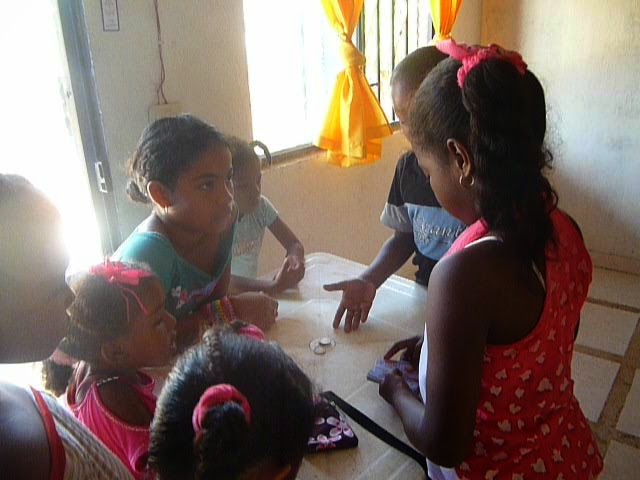
It was definitely a new experience for me this Easter, but I also brought a tradition from the US with me to share with the kiddos in Libertad: on Thursday I invited all the kids over to paint eggs. Everyone thought that was just the most bizarre thing when I invited them, but they all came. And they loved it! I had to get creative with the paint since there was no dye to be found anywhere; we ended up finger painting with regular paint. It was messy and awesome.  Just imagine it: 30 kids painting eggs in my house and me (really just a big kid) as the only adult.  YES!


Like Christmas and New Year’s, the Easter celebration was very different for me, but it definitely was very enjoyable!  Happy Easter to all!  He has risen!


Sunday, March 23, 2014

Updates

“You can be the most beautiful person in the world and everybody sees light and rainbows when they look at you, but if you yourself don't know it, all of that doesn't even matter. Every second that you spend on doubting your worth, every moment that you use to criticize yourself; is a second of your life wasted, is a moment of your life thrown away. It's not like you have forever, so don't waste any of your seconds, don't throw even one of your moments away.” -C. JoyBell C
  1. Kevin and the other pigeon are still alive! I have kicked them out of the house now because it was getting gross cleaning up after them, but they have become used to staying around in the back yard. Even though lots of other animals come around, no one has eaten them yet! And they have learned to eat by themselves so I don’t need to worry about them when I travel. 
    Kevin and her friend
  2. The cockroaches are dying! I broke down and bought a cockroach killing spray. It’s been great to wake up without cockroaches falling out of my hair.
  3. Dead cockroaches
  4. The elections were two Sundays ago and it was definitely an interesting experience. Everyone was out and about voting and, afterwards, celebrating. The celebrations were intense- almost as big as Christmas! The politicians that my family was supporting won (they are doing a recount of the votes, but the results won’t change because they won by a landslide) so things are looking up in the house. For this family it means a better opportunity for finding work. There was a chance that my host mom was going to have to leave to find work in another part of Colombia if things didn’t work out. So I’m definitely happy that she’s staying!
  5. I have gotten much better at stoop sitting… I still don’t last very long, but at least now I understand better what people are saying, I have a better concept of the context and who people are, and I have more to add to the conversation. I usually end up running off with some kids or grabbing a book to read, but I have improved immensely!
  6. As far as cooking lessons, pretty much everyone here is sure that I can’t cook worth beans. Instead of trying to prove myself, I have decided to take advantage of the great cooking of my host mom (who lives next door) and eat with the family fried fish, coconut rice, yucca, chicharron, squash soup, and other delicious things. Now I just bake- bread, brownies, pumpkin bars, banana bread, carrot cake… I don’t like arriving at people’s homes to visit empty handed! My host mom jokes that I only eat bread and cake. I do love to bake and I am so happy I have my oven!
Playing with kiddos instead of stoop sitting

Saturday, March 22, 2014

A Little Bit About the Havana Peace Talks

"If you want to make peace with your enemy, you have to work with your enemy. Then he becomes your partner." -Nelson Mandela

Since October 2013 the government of Colombia and the Fuerzas Armadas Revolucionarias de Colombia (FARC) have been in conversations in Havana, Cuba discussing the possibility of signing agreements that would bring peace to the country.

The agreements are made up of six parts:

1) Land Reform
2) Political Participation
3) Disarmament
4) Illicit Drugs
5) Rights of the Victims
6) Peace Deal Implimentation

The two parties have already agreed on the first two parts, but it is necessary that they agree on all six in order for the agreements to be officially signed and put into place.

This is not the first time that peace talks have taken place; there have been several other occasions in which dialogue happened between the government and groups outside the margin of the law, but they have always failed due to neither side being able to actually listen to the other and having not being interested in negotiating.

This time there are a variety of opinions around the talks: some people are more hopeful. This is the first time that the FARC has recognized that there exist victims as a result of their actions. There is also a change in vocabulary used; for example instead of asking the group to “turn in” their weapons, they are asking them to “leave” their weapons. This change leaves a lot of questions around what will happen to all of the arms that are in the hands of these groups, but it also makes it more likely that the group will agree to the terms.

Some people are not convinced of the likelihood that anything will change if the agreements are signed. One friend told me that the talks are just an excuse for the president to look good and even if they are signed nothing will change here in the communities where it actually matters.

And he has a good point: signing the agreements is one thing, putting them into action will be the hard part. How will the agreements be implemented? Who will make sure that they are implemented? The possibility of the implementation of these accords is the reason why this political season was so intense: whoever is in power now will determine how the agreements are interpreted and how they are implemented. Unfortunately, the political system depends more on the money the politicians can give their constituents to be elected than what they can actually do to fight for their rights and best interests in the government. Ideally, the agreements should be interpreted by the people that they directly affect: the people of the countryside, the people who lived in fear of members of armed groups coming into their towns, their homes- the people of Colombia.

And there are people who don’t want the agreements to be implemented, who do not want peace in Colombia. War is great business; there are groups of people making money off of the conflict. From this point of view, peace would mean less money and less power, and therefore not something that they are interested in.

However, as a wise academic told our group in Bogota, there will always be conflict and there will always be the transformation of one set of conflicts into other conflicts, but this does not mean that resolution should not be the goal.

And right now it seems like resolution of these 50+ years of conflict, at least on paper, is close. But Colombia is known to have beautifully written laws (check out the constitution which names peace as a right) and not a good track record of implementation. Here’s to hoping that this time Colombia can find a way to bring what is decided in Havana to Libertad.

Information thanks to the wise and knowledgeable people in Bogota, Sincelejo, and Libertad who took the time to explain the process and their ideas about the peace talks.

Check out more information at www.mesadeconversaciones.com.co


Thursday, March 20, 2014

Things here are different…


"All the windows of my heart I open to the day." -John Greenleaf Whittier

Whenever one is in a new place, one sees new things. I have definitely seen some interesting things here.

For example, I had no idea that chickens slept in trees:


Or that motorcycles were kept in living rooms:


And I never tire of seeing the teenage guys ride by on their donkey on the way to work on the farm, listening to their mp3 players. The juxtaposition of it makes me smile every time. Who says you can’t commute on a donkey with good music? I sure wish I had a picture of this!

I also have no idea how I get so much dirt in my house every day! I clean every morning and every morning I sweep this amount of dirt or more out of my door! (Notice the dead cockroaches. Getting rid of them little by little!)


When my friend in Mampujan found some peanut butter in her house she was excited to make me a sandwich… I definitely did not expect a ham, cheese, and peanut butter sandwich!

Lastly, I never expected to eat yucca (a staple food here, pretty much eaten with every meal) with mac and cheese (yes, I found mac and cheese at the big super market in the city and decided to eat a bit of comfort food), but here is proof of my dinner the other night:

Thursday, February 27, 2014

I Live in a Zoo

“I cannot even imagine where I would be today were it not for that handful of friends who have given me a heart full of joy. Let's face it, friends make life a lot more fun.” -Charles R. Swindoll

For most of my life, I have had fish. When I was in elementary school we took a couple fish from our friend’s pond and put them in a tank in our living room. They lived until I was in high school. Throughout college I had fish, transporting them back and forth between Minnesota and Michigan in Nalgene bottles. In grad school, my boyfriend had fish…

Now, in Libertad, I don’t have fish. I was thinking that fish would be nice. I mean, they are so easy to take care of, they are cute, and they do not take up much time. However, fish are not what ended up living in my house.

The first animal that I noticed sharing quarters with me was George. I don’t really know how it started, but every time I see a little lizard I say, “Oh, hola George!” It makes the kids laugh. I am pretty sure they think George is the word for lizard in English. I’ve done it so much, that now I greet the lizards even when the kids are not playing in the house.

Then one night when I was washing the dishes, I picked up my bowl and what comes scuttling out? A cockroach. I wasn’t really surprised and I killed it with my flip flop. Then in the shower, one scuttled over my foot. That one got away. I do not give the cockroaches names.

The next animal to enter into my house came in through the ceiling. I was lying in bed (in the back room, my “I’m not sleeping but I want to rest” room) watching a movie on my computer and I saw it peeking out from where the roof meets the wall: a mouse. The little guy then proceeded to crawl down the wall, like Spiderman. I was impressed. I did not know that mice could do that. However, when he reached the ground and went under the bed, I decided it was time to switch rooms and hop in my sleeping bed.

The next morning I got out of bed and was walking toward the kitchen when something fell from my hair, hit my shoulder, and landed on the floor. I looked at my feet to see a cockroach crawling away. I immediately smacked it to death with my sandal and turned around just in time to see a mouse crawling out of my room. When I went back to make my bed, I noticed mouse poop by my pillow. I decided that that was enough of that: having these little buggers in my bed with me is not a welcome experience.

I decided that I should get a cat.

However, I did not get a cat.

One day, two of my little buds showed up on my step with a pigeon. They were so adorable in how insistent they were that I keep the pigeon and their promises to come twice a day to feed it (which they have fulfilled) that I accepted the gift. I named the pigeon Kevin, like the bird in Up.

“Kevin’s a girl!?”

Best line.


Anyway, everyone here thinks I named her after a guy who is a part of the Community Council.

A couple days later, the boys returned with another pigeon. I really didn’t feel like I needed another bird, but they convinced me that Kevin needed company. So Daniel arrived. Unfortunately, Daniel escaped pretty quickly. No fear though, he was immediately replaced with another pigeon (yet to be named). Originally I kept them tied up in the back bathroom, but now they’re pretty used to being in my house and so they don’t try to escape. I still try to keep them in the bathroom because, let’s be honest, birds poop a lot.

The kiddos come over every morning and every afternoon to feed Kevin and give him water (the second one is older so he eats by himself). We sit on the porch and make sure they are well fed and the boys talk about which parts of Kevin they are going to eat when we cook him. They mostly do it to get a reaction out of me (because there is no way I am letting them cook Kevin), but it is something that people do here: eat pigeon. Apparently it is tasty. 


So now I have many Georges, cockroaches, mice, and pigeons.


I think in the future I’d like to stick with fish.

Monday, February 24, 2014

A Different Way to Vote

“No Pessimists ever discovered the secret of the stars, or sailed to an uncharted land, or opened a new heaven to the human spirit.” –Helen Keller

I’m not a big fan of elections in the United States and it turns out I’m not a big fan of elections in Colombia either.

It is election time now and I am learning a lot. I have learned that elections don’t all happen on one day: in March they will vote for senate and representatives, but later in the year they will vote for president; I have learned that people can vote once they are 18 years old, like in the US; I have learned that there are many political parties, but some are much stronger than others; but mostly I have learned about the practice of “buying” votes.  With the peace talks between the Colombian government and the FARC hopefully coming to a close in Havana, these elections will determine who is in power when the agreements are put into place.  There is quite a lot at stake which is generating a lot of movement and involvement in the vote buying process this year.

It’s been pretty depressing. Living among the people in the community, I totally understand why it happens and why it works this way, but from a stance of idealism, it is a completely broken system. Most people have little hope that a candidate is actually going to do anything to support their rights and needs as a community, so instead of taking into consideration what the candidate is promising to do in the future, the people look for what the candidate will give them now.

The process is well organized. Candidates have people in the communities that look for votes for them. These people talk with the community members, find out what they need (money, a laundry machine, blocks to construct their house, a good reference for a job) and in exchange for a promised vote, they get them what they need. The people who are looking for votes also get some sort of compensation. And not only is it individual compensation, but community compensation as well. Our neighborhood has been promised a transformer by one candidate (selfishly, I’m kind of hoping that one comes through… I haven't had electricity for 3 days now and I’m sick of unplugging my refrigerator on a regular basis in the evening when the electricity goes wacky.). 

Not only are there political posters everywhere, but they paint walls of stores, homes, and businesses with the names of the candidates.  It's pretty much everywhere.

One neighbor explained to me that this year they are much more organized because they have had problems in the past with people getting on more than one list and receiving compensation for more votes than they could actually give. This year, they are comparing lists and making sure that everything adds up. There is no actual way to verify that people are actually voting for the candidate that they say they will vote for, which gives me hope: at least there is still anonymity in voting. However, even though the candidate may not be, the people are honest, and if they say they will vote for someone, they will vote for that someone.

It all makes me feel incredibly hopeless, but one friend here reminded me that it can change. If the community was able to organize, to back one candidate that they believe in, the system could change. “Sí se puede cambiar, Lani. Se puede cambiar,” she told me. There is always hope.