Saturday, October 10, 2015

Monday, September 14, 2015
A Change in Plans
"Three grand essentials to happiness in this life are something to do, something to love, and something to hope for." -Joseph Addison
Two years ago when I came down to Colombia, I committed
myself to staying here for these two years.
About a year into that commitment, I began to realize that two years was
just not going to cut it for me. I was
just getting into the swing of things with the communities: learning how to
work within the complexities and challenges; understanding how slow the
processes are but how it is worth the time and energy; accepting the fact that
the more I learn, the less I understand, but wanting to always learn more;
feeling more and more at home in this new home and more and more anxiety about
leaving.
After reflection, conversation, and looking at the options,
I’ve decided to stay. Sembrandopaz has
given me the opportunity to continue working with them in a new capacity but
still with the communities. I will be moving
out of Libertad to the city to be closer to one of the offices,
but I will continue to travel between all of the communities that we
support. I will be mainly involved in
different efforts with the youth and women in the region, as well as helping
Sembrandopaz focus on psychosocial supports.
I am very excited about this plan. When I left Colombia in 2010, I decided that
I wanted to find a way to return but instead of teaching English, I wanted to
work with youth, victims of the conflict, and have a focus on psychosocial
interventions. Five years later I find
myself doing just that.
Thank you to everyone who has been so supportive, loving,
honest, and patient in helping me get here and helping me continue to follow my
dreams, grow as a person, and stay sane.
J
Monday, June 1, 2015
A Chicken Adventure
“Peace is not a little white
dove. It is you and me.” –Rigoberta
Menchu Tum (1992)
This year marks 15 years of Mampuján’s displacement. This year the government also finally started
acting on the plan that was developed for the community’s return to their
original location. This means that there
are now houses being built and even people moving back.
When planning the Commemoration this year, the leaders of
the town said that they wanted a relaxing day that was focused on celebrating
the town, not like in years past when the event was much more focused outward on
guests and visiting organizations.
Seemed like an awesome plan.
Which is why I was confused when I arrived the day before
the commemoration to help set up and I was immediately sent to help hand out
“the meat.”
 |
| Nice cutting board huh? |
Handing out the meat meant, weighing (94 kilos of meat),
dividing (each person should receive 228 grams of meat), and giving the meat to
each family (over 100 families) in Mampuján.
It involved a broken scale, machetes, and lots of stressed out people. The meat part was entertaining, but the real
adventure began when it was time to hand out the chicken.
That’s right, it wasn’t just meat, but chicken as well.
And that was even more unbelievable. 200 whole chickens in plastic tubs. Let’s just say the smell was not that
awesome.
 |
| That's a lot of chicken! |
By the time we finished the meat, it was 10:00 pm. So at 10:00 pm we started the chickens. We got a system going: someone macheted them
in half, I pulled out their guts, and then someone else cut them into smaller
pieces to be divided amongst the families (each person got 380 grams of
chicken.) I pulled out chicken guts until 1:00 am. I think one could say I am now a pro…
At 1:00 am, we began to realize that we were going to have a
lot of chicken left over; most people already had their chicken and we still
had 50 or so chickens hanging out with us. If we left them like they were, they
were going to go bad… So people built up fires, put on huge pots of water, and
created roasting spits. Chickens were
boiled and roasted until 4:00 am in order to not lose any of the meat. People were crabby, tired, and stressed.
And I couldn’t stop laughing, which probably didn’t help the
situation. Ridiculous things seem to
happen all the time in Mampuján, and one just has to recognize it and enjoy
it.
Despite the long night of meat/chicken craziness, the day of
the commemoration was beautiful. None of
the planned programming actually happened, but it was just as if the people
were living in Mampuján like before: everyone was cooking, eating, hanging out,
enjoying softball games in the plaza, having horse races, laughing, yelling,
singing… It was like a real town.
 |
| A presentation of the tapestries that the women sew in one of the few homes still standing in Old Mampujan. |
And that’s what the leaders were looking for that day:
creating a sense of community in the place where the community originally
existed, in the place where they hope to have their community permanently once
more.

And the next day I woke up with my hand totally infected
with cuts from chicken bones. So I guess
I’m not that much of a pro...
(The infected hand from chicken bone cuts is another crazy
story involving puss, a swollen lip, and a kitchen on fire, but that’s for a
different time.)
Tuesday, May 5, 2015
A Timeline from the Last Time to Now
“Now I will turn miracle into routine. The amazing will be seen every day. I will put in all the hard work
necessary. Yes, so long as God is with
me, I will not die. Amen.”
Life of Pi by Yann Martel
Four months have passed since I have posted anything. It’s not that I haven’t had any crazy
stories, reflections, or news, but rather a combination of not knowing how to
share what is going on and finding the time to write it out. So in order to quick catch everyone up from
January to now, here is a short timeline of events so far this year:
January
I
I
I
At the end of January, all of us in the SEED program went to
Barrancabermeja to visit a community called Micoahumado. Micoahumado is a community that is currently
experiencing conflict with armed groups in the south of Bolivar. We had a very intense experience there, but
it was inspiring to see leaders so committed to their communities and to
nonviolent resistance. You can read my
reflections here(I will post my blog that I wrote for SEED here when they publish it!)
I
I
I
February
I
I
I
In February we started spreading Ultimate Frisbee to
different communities in the area. We
first got to adventure to a town in the mountains where we got to play for two
days straight and since then we have been sharing the game with communities
closer by with hopes of arranging a tournament here in Libertad in July! (More to come on that later!) You can see a bit of our experience in the
mountain here:
I
I
I
March
I
I
I
At the beginning of March all the SEEDers came to the coast
to visit all of the communities we support in Sembrandopaz. It was awesome to listen to the communities
share their experiences with our colleagues and hear their reflections and the
connections that they see between where they are accompanying in Colombia and
the coast. Plus we got to make fun of
our teammates trying to ride donkeys.


I
I
I
One of my friends and coworkers was in a motorcycle accident
at the beginning of March and has been in the clinic in Barranquilla since then
recuperating from a broken femur and a skin graft. She’s doing really well but prayers are
always appreciated for a full recovery!
I got to visit her three times and send the night with her. We even painted eggs on Easter!

I
I
I
At the end of March, my parents came to visit! It was so good to have them here and share with
them the communities where I accompany.
They were such troopers and went wherever I had planned- Mampujan,
Pichilin, Libertad… It was so fun to share it all with them! And then we relaxed on the beach. It reminded me how much I like reading; I
haven’t just sat down and read for a long time!
I was very happy to share this time with my parents eating cow
intestines, riding buses and motorcycles, having translated conversations with
friends, and reading on the beach. Thank
you Mom and Dad!

I
I
I
April
I
I
I
Easter was fun! Just
like last year, I got to eat a lot and painted eggs with the kiddos. Fish, rice and beans, potato salad, and all
classes of sweets… It is my favorite week because everywhere you go, people
give you delicious food. And this year I
had forty kids come by to paint eggs. It
was a blast!

I
I
I
There has been a nation-wide strike by the teachers so the
students have not had class for a while, which means I get lots of visits and
drawings by kids! Check it out!

I
I
I
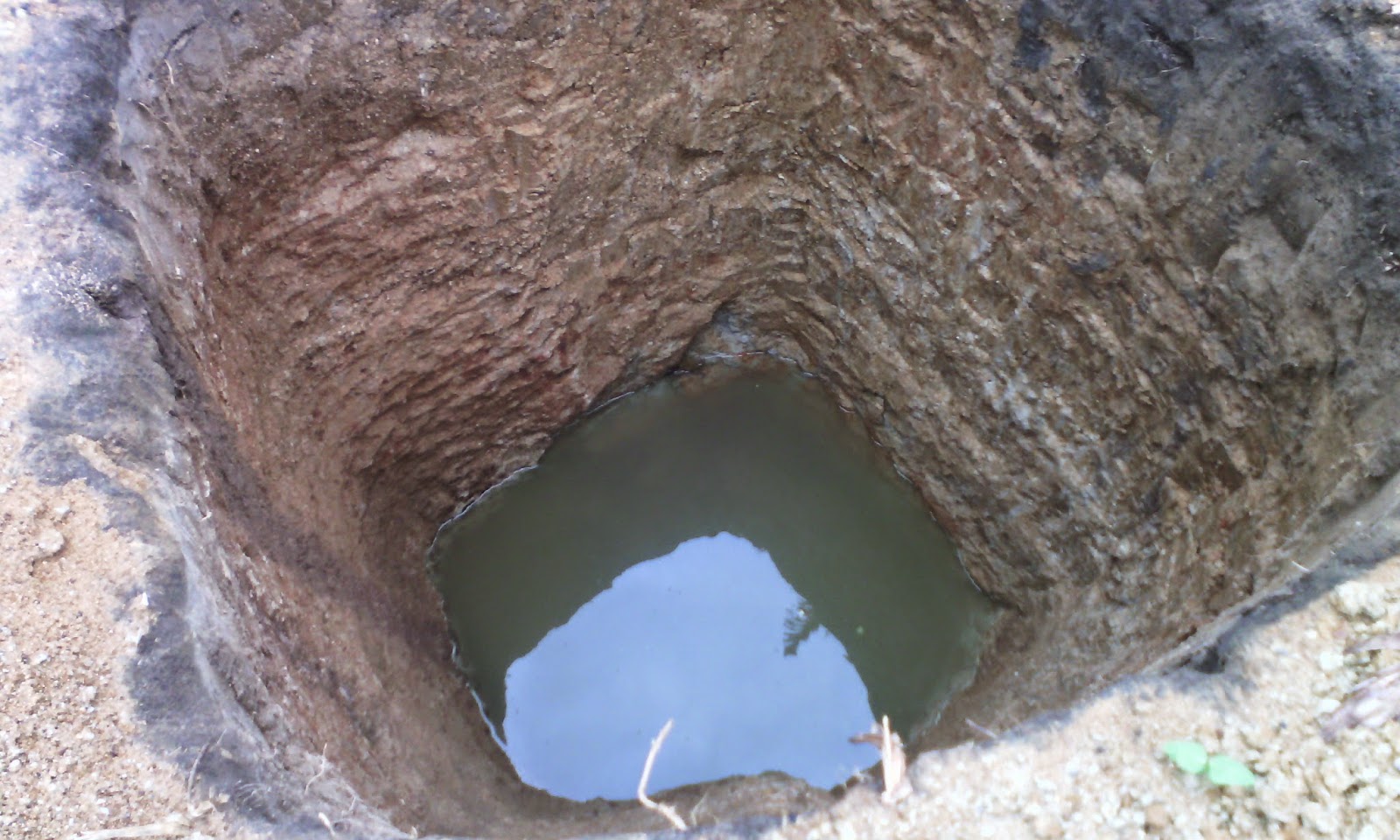
My neighbor dug a huge hole in the backyard because she had
a dream that her grandpa had buried a fortune there. They found salt water… I found this pretty entertaining.

I
I
I
The rest of April has been full of getting into the swing of
work… It is a little crazy how long it takes for things to get started, but now
the leaders are organizing themselves and the work they want to do in the town,
the youth are starting to organize themselves as well, Frisbee plans are
advancing, and community exchanges are getting planned! It’s going to be a good year!
Saturday, January 10, 2015
It’s Complicated
"I am only one, but still I am one. I cannot do everything, but still I can do something; and because I cannot do everything, I will not refuse to do something that I can do."
-Edward Everett Hale
Many of my posts have been funny stories, anecdotes, events, strange things, difference in culture, and the history of the country and communities.
It’s pretty easy to write about that stuff: laughter, surprise, intrigue… But there is so much underneath all of these stories. And this underneath stuff is really hard to share. One reason is that it’s hard to find the words to describe exactly what is going on in the government, in the region, in the communities, in my relationships, in myself. Second of all, I don’t even understand a lot of it…
As most of my conversations end with my colleagues, it’s complicated.
I want to try to share some of complexities that we deal with here. As I said, I often don’t have the words and I don’t understand so many things, but here we go:
*I live in a community of farmers without land. Many sold land to large land owners who now use the land to graze cattle. The other part of the land is in the hands of a large shrimp company, but it went bankrupt two years ago. Many of the people in the community left farming to work in the shrimp company. Now there is no shrimp company, no land, and few skilled farmers… How does a community like this support itself? How can economic opportunities be created so that people do not have to leave in order to support their family? As an Afrodescendent community, they have rights to collective land… but if there is no land nearby for them to buy, then what? If they did all the work to submit the papers to get a piece of land for the community and never got a response from the government, then what?
The community suffered a lot of violence and because of that they are one of the pilot communities in the region for collective reparations. The reparations include many things that the community lacks, like an ambulance, advanced medical attention, specially trained police, centers for community congregation and events, adequate water and drainage systems, specialized classrooms in the school, among many other desired necessities. Not only have two years passed since this plan was approved and the community has seen nothing done, but many of the things that are included in the plan are already rights that the community has as Colombians or as Afrodescendents. Reparations should be things that are in addition to the rights that the people already have by law. How can the government take advantage of their own people like that? The community has been pushing and trying to get the entities to complete the promised reparations/rights with no response from the government or the different entities in charge of developing them. What more can the community do to call attention to the situation? What can the government do when they don’t even have the resources to complete what they promised the community they would do?
The community has a good number of leaders with good leadership skills and the desire to help the community move forward and grow. However, there are so many things in daily life that keep these leaders from being able to truly focus their efforts and complete their work. The lack of resources to travel to meetings or carry out projects, gossip from within the community saying that the leaders are taking money, fear of powerful people that may not want them to be doing the work of community leaders, the necessity of looking for ways to support their family, and taking care of sick loved ones are all factors that complicate the lives of community leaders. How can one expect someone to step up to lead a community if their life is threatened? Or if they don’t have enough money to send their children to school or to feed them in the evening? How can one expect someone to be a leader of the community if they are accused of doing it for the benefit of their own pocket?
People dying from lack of an ambulance and good medical attention but not receiving any help from the politicians who come promising money for votes; having to dig in the arroyo to find water to cook and bathe if there is no water arriving at the house because a truck broke a pipe in the aqueduct and doesn’t want to pay to fix it; having police in the town but no presence when a fight occurs; having a history that forms a culture of looking out for oneself over others and aggression over peace… These are only a few of the things that come to my mind when I think about the challenges in this rural community.
As I said, most of my conversations with my coworkers end the same way: “It’s complicated…”
But totally worth it.
Wednesday, December 17, 2014
Three stories about Motorcycles
“I am a traveler on the way to a sacred place where God holds me in the palm of his hand.”
-Henri Nouwen
Motorcycles are the main source of transportation here in Libertad. Well, motorcycles and donkeys. But I’m not as good on a donkey as on a motorcycle.
 |
1) The time I tried to carry two cakes for three hours on a motorcycle
My friend Aleja celebrated her birthday in September and threw a big party for the whole community where she lives. As she was making food for over 100 people, she decided that she wouldn’t be able to also have cake. However, she also told me that a birthday is not a birthday without cake.
So I decided to bring her cake to celebrate her birthday.
But she lives three hours from where I live…
So, being a person that thoroughly thinks through everything (note sarcasm), I had my friend in Libertad make two cakes, as big as possible, since we needed enough cake for over 100 people. My idea was to leave them in the pans and just decorate the top so that they wouldn’t be destroyed in the journey (I was thinking a little bit). However, as things often don’t go as planned, one of the cakes didn’t turn out well so my friend had to use the same pan for both cakes. So I had two beautifully decorated cakes to bring to Aleja for her birthday.
We set out early, because we also had to run some errands around Sincelejo beforehand (an extra hour with two massive cakes on my lap). I started out alright, the cakes in boxes, the boxes in a bag, and the bag on my leg.
Ten minutes in, I knew it was a bad idea. But all we could do was continue.
When we finally arrived at Aleja’s, I was afraid to open the boxes and find two completely smashed cakes. However, I was surprised to find that although the decorations were completely destroyed, the cakes themselves were fine!
 |
| Ruined cake |
 |
| Fixed cake! |
But never again will I carry cake on a moto.
2) The time we paid 1000 pesos to carry the motorcycle across an arroyo
It has been a very dry year this year, but the other day it rained. And I mean it rained.
I was supposed to head out of town to meet people from the office in Mampujan early in the morning, but since it was raining, we couldn’t leave. It began raining at 6 am and didn’t let up until 11. At noon, we decided it would be okay to try to go.
The road one takes to enter and leave Libertad is not paved, therefore when it rains like this day, it is quite spectacularly filled with mud. I absolutely trust my driver, so I had no doubt that we’d make it okay, but it certainly was an adventure.
Then we arrived at the arroyo…
There is a spot just a little bit after the next town where, on a normal day, there is just a little trickle of water over the rocks, but after a rain the water rushes quite strongly. And this day it was rushing.
 |
| Waiting for the arroyo to calm down. |
 |
| See them carrying the moto? |
We paid the 1000 pesos and continued on our way through the mud. By the time we reached our destination, the wind had already dried us out.
3) The time I fell off the motorcycle into the same arroyo to protect fish
The other day, the director of Sembrandopaz asked me to do him the favor of bringing him some fish from Libertad to Sincelejo since the fish is cheaper here (and fresher- they catch them right here!)
Not a problem.
But… then the Styrofoam cooler cracked and the handle broke, so before we started out to Sincelejo (at 4:30 in the morning, mind you), we put the cooler in a sack. This made it very difficult to grab on to (also, realize that this cooler is quite large and filled with ten kilos of fish and ice on top of that).
It was very similar to my experience with the cakes… Ten minutes in and I knew it was going to be a very long morning.
Then we reached the same arroyo that we paid to cross the moto. This morning there was no rushing water, just some water pooled between the rocks. However, a combination of the darkness (remember it was 4:30 am), the rocks, and the way the cooler made balance difficult… we lost control a little bit.
No, really, it was just me that lost control a little. The driver was fine. He was super surprised to look back and see me, flat on my back, clutching the cooler, in the water pooled between the rocks.
“Lani! Cómo te caiste!?” “Lani, how did you fall!?”
Let’s just say, I am very faithful to the director of Sembrandopaz and I was not going to let those fish fall! So, when they started to go, I went with them.
“Lani, te mojaste?” “Lani, did you get wet?”
Did I get wet!? Ha! I was soaking wet, backpack, pants, sweater… But hey! I wasn’t hurt! So I hopped back on the moto and we continued on safely to where I catch the bus, put the fish in the back, nabbed a seat, and promptly fell asleep (still sopping wet).
Now, it had still been dark when I got on the bus so I didn’t actually see myself until I woke up in Sincelejo and got off the bus.
And what a disaster I was! The water I fell in was super dirty and therefore I was super dirty. How embarrassing to try to get someone to stop to bring me on a motorcycle with a cooler full of fish in a bag, wet, dirty, and smelling disgusting. The guy who stopped looked at me like I was insane.
My coworkers also looked at me like I was insane when I arrived.
“It’s only 7:30 in the morning, Lani! What sort of trouble could you have possibly already gotten yourself into!?”
But the fish made it safe and sound! :)
Sunday, December 7, 2014
Three stories about Yuca
“For me, I am driven by two main philosophies: know more today about the world than I knew yesterday and lessen the suffering of others. You'd be surprised how far that gets you.”
― Neil deGrasse Tyson
Yuca is a common root starch that we eat here. I think that in English it is cassava… But I really had never heard of it before living here. Now it is something very common, eaten with breakfast, lunch, or dinner. It is a staple in every potluck the community has; I love helping peel the yuca at the olla comunitarias! They made fun of me at first because I was really bad at it, but I have definitely improved.
 |
| Peeling yuca at an olla comunitaria |
1) The time I tried not to eat yuca
When Aleja and I first arrived to the coast, we were inundated by yuca. We ate it all the time in the communities. The first time we left the communities to go back to Sincelejo, we decided to not eat any yuca. We ate bread, apples, good coffee… things we don’t have easy access to where we live.
That night, the office had a fancy dinner for all of us. One of our coworkers made a special juice to celebrate. We all drank it, commenting on its deliciousness, asking what type of juice it was. We guessed all sorts of fruits and vegetables; someone even guessed spaghetti… Finally we gave up and she told us: YUCA!
NOOOOOOOOOOOOOOOO!!!!!!!!!
So when we tried not to eat yuca, we drank yuca.
But now, we both love yuca and when we are traveling out of the communities, we miss the fresh yuca that we have access to here.
 |
| Yes... I even eat yuca with mac and cheese. |
One of the things I do in town is lead a psychosocial support group for some kids in the school. We cover all sorts of topics, from team work to affective education to self esteem to coping skills. When we were talking about coping skills I asked the kids to tell me what they do when they are feeling sad, frustrated, nervous, or scared. They said things like dance, play with friends, talk to a parent, walk, listen to music, pull yuca…
What?!
Pull yuca.
ABSOLUTELY! Pulling yuca takes force and strength and it would positively be a fantastic way to get out anger. It’s probably one of the best coping skills I have ever heard and it is something I would have never heard if I didn’t live here.
3) The time the kids taught me how to play The Yuca
I spend a lot of time with kids. We just get each other. And they always put me in a good mood.
The other night, I was just doing some stoop sitting when some kids surrounded me. After they read me a book and brushed my hair for a while, I asked them what we should play.
“Yuca!” they all screamed.
Interesting… yuca is a game the kids play? I was intrigued.
It begins with deciding who will be the seller and who will be the buyer; the rest of the kids are yuca. The kids who are yuca grab onto a nearby post and cling on for dear life. The buyer comes up to the seller says, “Sell me yuca.”
The seller says, “What happened to the yuca I sold you yesterday?”
“The mice ate it.”
“Why weren’t you paying attention?”
Here the kid makes up some excuse: “I was washing clothes,” “I was sweeping the patio,” “I was in the fields,” etc.
Then the seller gives the buyer the go ahead and he or she grabs a kid/yuca and pulls until the kid lets go of the group.
The process repeats: “Sell me yuca.” “What happened to the yuca from yesterday?” “The mice ate it.” “Why weren’t you paying attention?” Excuse. Pull up a yuca kid.
When all the yuca is pulled up, the game changes. Now the kids that were yuca become dogs. The buyer passes by where the seller is and the seller asks, “And the money?”
The buyer makes up an excuse: “I left it on the shelf,” “I left it in the laundry machine,” “I left it in the sink,” etc.
Finally the seller says, “The next time I will send the dogs after you!”
When the buyer passes by again, all the kids chase after the buyer until they catch him.
Spectacular.
Definitely my new favorite game.
 |
| Let's play The Yuca! |
Subscribe to:
Posts (Atom)